Friday, December 10, 2010

Heartbreak Gallipoli

            The loss of human life in Gallipoli was staggering.  The survivors haunted by memories of terror.  Politicians, far removed from the battlefield, were playing a game of Risk with life that wasn’t theirs.  From the movie trailer, Gallipoli (2005) Trailer, there are several scenes and narrative that provide clues as to why there were so many casualties.
            Motivation would be at the top of the list of reasons.  Britain was trying to protect its imperialistic empire and was using the call of duty (ironic re: weekly article) as a selling point to enlist as many people as possible.  With patriotic hearts in hand, thousands and thousands joined the fight, only to find a resting spot for life in a foreign country.  The rows and rows of cemetery crosses, illustrated in the trailer, detail this fact.
            Similar to our present day struggle in Afghanistan, the terrain and natural elements of the Turkish state made it very difficult for the British to maneuver and provide enough supplies for their troops to survive and work efficiently.  The Turkish army definitely had the strategic advantage of knowing their harsh and unforgiving surroundings and was able to better prepare their troops.  Britain’s troops were thrown into the unknown.  The natural beauty of this area, that the trailer exemplifies, was not conducive to the replenishment of supplies, or the style of military maneuvers, that were used to defeat the enemy.
            Apparent throughout the movie trailer were the rounds and rounds of mortar fire and machine gun attacks that pummeled soldiers at every turn.  The machine gun was invented in 1884 and was manufactured and readily available for this war.  Using what was modern weaponry at the time with outdated strategic tactics turned Gallipoli into a slaughter house.  A similar problem faced the British during the Revolutionary War.  They were very slow to adapt to the “gorilla” warfare of their enemy.
            The impact of the tremendous loss of human life was a strategic tragedy as well as a societal tragedy.  With so many soldiers dying in this specific conflict, Britain was unable to replenish troops in any of its other battlefronts.  When every person that could be enlisted was already in other battlefields killing or dying, Britain’s own boundaries were at risk of being invaded.  Turkey sustained huge causalities, as well, but was not stretched as thin strategically.
Socially, Britain’s loss of young, predominately male life would affect their ability to replenish its population.  Britain would experience diminished power around the world and the power to propel its own economy. There would be a lack of people able to work productively in any career, such as farming, manufacturing…etc.  There is no measurement capable of extracting the emotional toll human losses, such as those in Gallipoli, can take on a population.  The grieving would be beyond words.  How does a nation recover and rebuild such a weakened population?

Reality: The Game Does Exist

“Lifting one veil of ignorance immediately reveals a number of new veils” – Matt Ridley
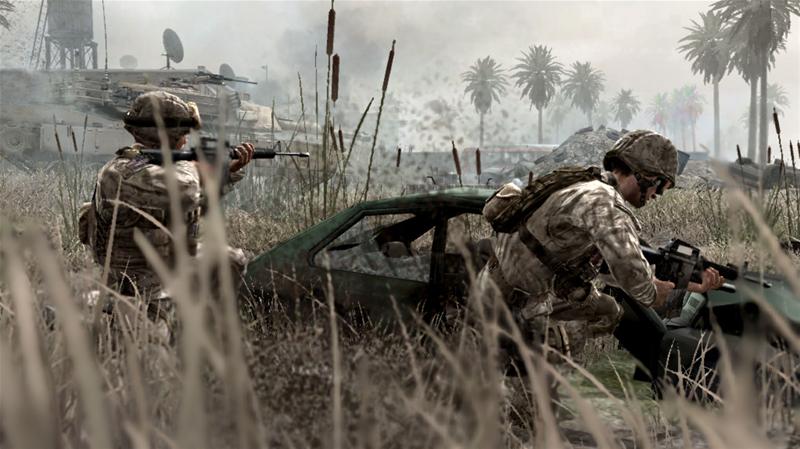
            The question of why Call of Duty exists supersedes the question of should it exist.  Why the game exists leads to the very basic question of whether human behavior is controlled by nature or nurture.  Obviously, this question is HUGE and still being vigorously debated.  New evidence suggests, however, that a transition between the two is evolving.  Humans, uniquely, have the capacity to accumulate information across time and space.  Stored knowledge and an increased understanding of the role genes play in human behavior will be the “only antidote to mankind’s destructive tendencies.” (Ridley, 2004)
            Should Call of Duty exist?  The answer calls for access to humankinds shared information regarding the role genetics play to overcome that violent inclination and choosing the moral willingness to follow a path to peace.  Christopher Gilbert, in his article Ready to Do Violence: War Games or Simply Modern Warfare quotes Kenneth Burke: “getting along with each other – not fighting, defaming, victimizing or killing each other – is the essence of the good life.”  There is always hope that mankind will choose the good life.
            Culturally, Call of Duty has a right to exist.  This type of glorification of violence is common place in all types of media.  Freedom of expression is constitutionally guaranteed. Whether reading a book, watching a movie or viewing the news on television, violence is served up as entertainment.  To ban it in one form would require banning it in all forms.  In all forms of communication, it is also virtually impossible to stop young people from being exposed to information, or actions that are not age appropriate.  Call of Duty is rated for mature audiences, but demand comes from younger consumers as well.  It is not the game, but the parent’s obligation to expose their children to appropriate material.
            Morally, Call of Duty should be revisited.  As Gilbert remarks, “war is not clean” and it is impossible to reflect the actual reality of blood being shed, body parts being blown away, homes being destroyed and the deaths of victims and their families.  Portraying a human decision, that involves those actions as entertainment, desensitizes the actual cost to life.   There is no physical or emotional price for the player to pay.  The more exposure younger generations have to these types of video games, the more acceptable it seems for life to follow fantasy.
            Thinking that Call of Duty is “just a game” does not justify its existence.  There is a reset button to start the game over, but there is no button for communication and negotiation with the enemy.  There is no nation rebuilding button or a button for renewing and reviewing “our collective senses of community, of humanity, of war.”  There is no alternative to the violence.  One only has to think of the game Monopoly to understand that games do have an impact.  As we increasingly live in a society where winner takes all, and there is less compassion or empathy for anyone else, does that game seem so innocent?


Friday, November 19, 2010

Hawaii Tweets

Queen Liliuokalani:
In dreams and on the streets, my people have spoken: stay strong, lead, right the wrongs.
01/14/1892 5:35AM

Queen Liliuokalani:
The eternal strength of my brother, King Kalakava, will guide my actions against outside interests. The Monarchy will reign.
01/14/1892 10:00AM

Queen Liliuokalani:
My constitutional declaration postponed! Cabinet strongly opposed my wish. Are the enemies so numerous?
01/14/1892 2:10PM

Queen Liliuokalani:
Intuition warns of interlopers. Forces beyond my control may dictate my actions. I fear for the future.
01/14/1892 8:00PM

Queen Liliuokalani:
Challenged! Committee of Safety will block my constitution. I am accused of “revolutionary act.”
01/15/1892 8:00AM

Queen Liliuokalani:
Warship, USS Boston, in Harbor. Will they hinder or help my actions? Must contact John Stevens American Minister.
01/15/1892 8:30AM

Queen Liliuokalani:
Options: declare martial law and risk bloodshed or surrender my throne? Sleep will not come easily.
01/15/1892 7:00PM

Queen Liliuokalani:
My brave, loyal supporters in Palace Square.  Betrayers meet in the armory.
01/16/1892 8:15AM

Queen Liliuokalani:
US troops have landed! Camped beside palace. Protesting these actions! No bloodshed, please!
01/16/1892 5:45PM


Queen Liliuokalani:
Protest ignored. Sanford Dole becoming President. Betrayed us! Will title ever belong to Princess Ka’iulani?
01/16/1892 6:20PM

Queen Liliuokalani:
Dole officially accepts Presidency. Our nation and ancestors mourn.
01/16/1892 7:05PM

Queen Liliuokalani:
No sleep. Nation in severe jeopardy of losing sovereignty to puppet govt. Greedy US politicians led by Lorrin Thurston.
01/17/1892 5:45AM

Queen Liliuokalani:
Provisional govt. led by Dole recognized by Minister Stevens. I will protest to the end.
01/17/1892 10.00AM

Queen Liliuokalani:
Loyal subject’s smuggled guns discovered. One man shot by police. Thankfully no others hurt.
01/17/1892 2:30PM

Queen Liliuokalani:
Proclaimation: end of my reign, beginning of provisional govt.
01/17/1892 3:00PM

Queen Liliuokalani:
Enemy troops ready. Will only yield my throne under protest. Will US govt. restore monarchy and sovereignty?
01/17/1892 6:35PM

Queen Liliuokalani:
Royal guards have surrendered. Peaceful acceptance of new govt. my people…
01/17/1892 8:05PM

Queen Liliuokalani:
Despair…US flag flies over govt. building. I await word from US govt. from my private quarters.
01/17/1892 8:30PM

Taiwan’s Giant Big Brother

http://online.wsj.com/article/SB10001424052748704648604575620023484722744.html
War Clouds over Taiwan, November 17, 2010, by J. Michael Cole


            Known formerly as Formosa, which means “beautiful island” in Portuguese, Taiwan has had anything but a beautiful national identity.  Imperialism, both political and economic, has scarred this paradise for centuries.  Recent events in 2010 suggest that the chess game for the Taiwanese territory is far from over.
            Taiwan is currently claimed by the People’s Republic of China (PRC) as a political state of their country, while Taiwan claims its own independent status.  Economically, China is especially interested in Taiwan for its recent transition into a financial powerhouse.  It has been called one of the Four Asian Tigers, along with Singapore, S. Korea, and Hong Kong, because of its quick industrialization and rapid technological growth.  Taiwan has weathered the global recession and remains tied economically with China through massive trade deals and investments.  Similar language and culture make the economic ties especially strong.  Taiwan also harbors many of the well-educated and wealthy Chinese who fled to the island when the communist PRC won the civil war on the Chinese mainland.
            WWII and the Chinese Civil War provide the stepping stones China uses as evidence that Taiwan is their territory.  The Japanese ceded Taiwan in 1945 at the end of WWII in accordance with their surrender, but Taiwan was never officially ceded to any nation in particular.  When Chiang Kai-shek fled to the island with his defeated ROC countrymen, they claimed the island was under the Republic of China umbrella and separate from the PRC.  Relations between the two countries have been extremely strained since that time, although the economic benefits of trade have dampened some of the independent spirit of Taiwan. 
For China, having Taiwan back in the fold would save the political “face” it feels it lost at the end of WWII with Japan.  The island of Taiwan also has strategic military importance as China expands its reach into the surrounding ocean.  The Taiwan Strait, which runs between China and Taiwan, is a major shipping route for oil and other cargo.  Taiwan, along with South Korea, is also the only piece of democracy which is flanked by communist China and its nuclear neighbor North Korea.  Taiwan has received military and economic aid from numerous countries, including the United States, to protect its democratic status. Unfortunately, as global funds dry up, China exerts more and more political pressure on the small country, including obvious military threats.
Tensions remain high in this area of the world, especially with nuclear capabilities in the hands of so many nations.  China’s aggressive, imperialistic actions toward “Formosa” are being watched carefully by the global community.

FoxNews: Your Consistent Source for Yellow Journalism

Health Care Rationing Czar Runs from Reporter
11/18/10

            A classic Fox News Network technique: report information out of context to create fear among a conservative audience.  In this case the headline is suggesting that Dr. Donald Berwick, head of Centers for Medicare and Medicaid Services, is actually running away from an innocent reporter to escape revealing any “secret” information regarding Obama health care legislation.  After watching the video and reading the accompanying news blurb, it appears that Dr. Berwick had made a remark regarding the redistribution of wealth to create a “just” and “humane” health care funding plan in 2008.  The reporter was insistently asking misleading questions regarding that statement.
            The redistribution of wealth comment was made two years ago and was distinctly Dr. Berwick’s opinion; it does not have any bearing on the current health care legislation.  With this headline, Fox News was specifically targeting an audience that reacts vehemently to the thought of the redistribution of wealth in this country.  This is the same type of outlandish reporting used by Hearst and Pulitzer to sell their newspapers to people before the Spanish American war.  It was clear that Dr. Berwick was on his way to a meeting and the reporter was badgering him with questions as he walked to his destination.  Dr. Berwick was not running anywhere from anyone.
            The headline did elicit these comments, which were posted below the story:

If czars don't make policy, why are they testifying on Capitol Hill? This whole thing is a scam and an end-around to get away with having radical communists and socialists put in positions of power where they can do permanent damage to our country's interests in favor of furthering the "cause" of true world socialism and the dictatorship of the ruling-class in our time.”

Defund, then repeal, end of story! Berwick can go to hades along with the rest of Obama's marxist pals. 
We the People are awake and will fight to restore our Republic. 

I think it would be a very bad decision if they decide to pull the plug on my parents simply because they made the choice. This decision is not up to them.
           
            The CEO of Fox News is Roger Ailes, a successful Republican political consultant.  Fox News Corporation is owned by Australian/American media mogul Rupert Murdoch.

Point of View

School of Americas:                                                   Al-Qaeda:

- Established 1946, Panama                                       - Established 1988/89 Afghanistan
- Trains military operatives                                       - Trains military operatives
- Funded by U.S., Multinational                                - Funded by Islamic banks, Middle
   Corporations, Latin American States                        Eastern States
- Promotes specific ideology, economic status quo  - Promotes specific ideology
- Methods: torture, rape, assassination,                     - Methods: torture, rape,
   murder                                                                        assassination, murder
- Victims: Govt. leaders, innocent civilians              - Victims: Govt. leaders, innocent
                                                                                        civilians

The Western Hemisphere Institute for Security Cooperation, formerly known as the School of Americas, is fundamentally the same type of organization as Al-Qaeda.  The United States rationalizes and defends the WHISC because it safeguards U.S. interests, yet hypocritically vilifies Al-Qaeda for using the same strategies.  Peace and basic human rights will only be spread by example and education.  The United States must strongly lead the world in this direction using non-violent methods and respecting the human rights of all.

Apocalypse Now!

“I love the smell of Napalm in the morning” – Colonel William “Bill” Kilgore
            From the movie: Apocalypse Now!

            Vietnam could be the poster child for Imperialism.  The country’s heritage is rich with foreign powers angling for total control.  The ending of Vietnam’s imperialistic story is extremely tragic; it’s simply called the Vietnam War.  Apocalypse Now!, a movie released in 1979, takes a microcosmic look at the Vietnam War on a personal level, with symbolic references to previous imperialistic history.
            Understanding the movie requires reviewing Vietnam’s history.  The first outside people to venture into the area were Catholic French missionaries. They were followed closely behind by the French military, which overwhelmed the Vietnamese with their military power.  They declared the territory a French colony using the necessity for a militarily strategic location, the beneficial spread of capitalism, and international trade benefits as justifications for their occupation.  Meanwhile, they exploited Vietnam’s natural resources and treated its people with distain, keeping them in poverty.
            From 1871 to 1940 the French declared the whole area French Indochina.  This area included Cochinchina (South Vietnam, including Saigon), Tonkin (North Vietnam), Annam (Central Vietnam), Cambodia and Laos.  In 1940 the French gave the Japanese access to Tonkin, which they used to their advantage in WWII.  In 1945, after the Japanese surrendered, the French tried to reinsert themselves into its former territory. However, continuous fighting with the communist Viet Minh, led by Ho Chi Minh’s Democratic Republic of Vietnam, led to a partitioning of the country during the 1954 Geneva Convention.  Vietnam was split into two countries. North Vietnam remained communist and was supported by China and the Soviet Union. South Vietnam was called the Republic of Vietnam, supported by the U.S., Britain, and France.  Cambodia and Laos were separated into separate countries.
            The Geneva Convention also called for a general election to be held in 1956 to finally unify the country.  Before the election millions of North Vietnamese moved to the south and only an estimated 10,000 moved to the north. The United States, at this time, was heavily invested in the interests of South Vietnam and its strategic location among the Cold War countries.  Fearing the “domino effect”, of one country becoming communist after another, the United States, using the Gulf of Tonkin incident, sent troops to Vietnam.  The fighting escalated, more troops from the United States were sent to Vietnam in 1960 and the war spread to neighboring Cambodia and Laos.
            Apocalypse Now!, directed by Francis Ford Coppola, revolves around the character of Captain Benjamin Willard who is sent on a secret mission into Cambodia.  Willard must eliminate a renegade war hero, Colonel Walter E. Kurtz, who has set up his own war operations in the heart of the jungle.  Coppola uses Willard’s foray into the darkness to reveal the horrific scenes of the Vietnam War, forever linked to the United States’ imperialistic fortunes. 
            Francis Ford Coppola also famously bases his movie on the novel Heart of Darkness by Joseph Conrad.  Conrad’s book is a story regarding the horrific affects of imperialism; its exploitation and devastation of the native African population by the country of Belgium.
            This movie illustrates that regardless of the motive of a larger nation the spirit of native peoples and their right to govern themselves is stronger than what modern warfare can extract from them.  In scene after scene, Captain Willard interacts with U.S. soldiers in a completely foreign country, totally surrounded by natives that they can or cannot trust.  Using crude weaponry and guerilla tactics, the Vietnamese mount an undefeatable campaign against the attacking U.S. military.  The emotional scenes of the human and environmental toll that is taken when one country feels moralistically and intellectually dominant over another give Apocalypse Now! its place in movie history.


http://en.wikipedia.org/wiki/Apocalypse_Now