Simply speaking: finding chemicals used to create bombs is never a really a good thing.
Also simply speaking: deciding how to treat suspected insurgents is not an easy task.
If this were my team of soldiers...
-I would confiscate all of the chemicals found under the floor tiles.
-The people found in the house would be transported to a holding location nearby.
-At the holding location, a translator would be provided for anyone who could not speak English.
-I would have my team ask questions at first, to see if any information could be discovered immediately.
-If the suspected insurgents either refuse to answer questions or give completely false information, a very minute amount of torture will be administered (such as wall stands). This, however, would be the harshest treatment given until other information is gathered from other outside sources.
-While the suspected insurgents are held, I would assign a K9 team of dogs to capture the scent of the chemicals used to make the bombs. The unit would hopefully sniff out the other location.
-If, and only if, the K9 unit fails to do its job, a heavier amount of torture (such as sleep deprivation) would be administered to gain further information.
-If no information is gained it may be assumed that the people are innocent, or they may be kept in a holding site for as long as it is necessary (until the other chemicals are located).
Simply speaking: this is incredibly hard just to think about, let alone write a blog about because of the urgency of the situation.
A short term repercussion could be not finding the bomb factory at all because of the somewhat slow, but relatively humane (as humane as torture gets!) process of interrogation. This puts countless lives in danger.
A long term repercussion could be an even worse relationship with the country involved. If we are already in the country discovering bomb factories and intruding in the lives of citizens, after news of the interrogation and torture leak out, the relationship can only get worse.
Friday, December 24, 2010
Declaration/Response
The United States was definitely using its intimidating power of intention to impress on Germany United States had huge resources, which included men, ships and submarines, to stop Germany United States
It appears thatGermany rejected the Declaration of War by the United States as illegal; rationalizing the war was between Europe ’s nation states. Germany felt that the United States was arrogant, and had overstepped its boundaries by getting involved with its war with England Germany
It appears that

Seesaw of Questions: Wikileaks
The recent release of United States of America ’s classified information, by Mr. Julian Assange of Australia
In consideration of the positive aspects of the release of this type of sensitive, governmental communication:
In consideration of the positive aspects of the release of this type of sensitive, governmental communication:
- Will the information released encourage the government to amend its policies of keeping communications secret?
- Will it inspire politicians to use all legal avenues of resolution before resorting to illegal or immoral decisions?
- Will citizens of the USA
- Will other countries follow the lead of countries that keep all information open for public scrutiny?
- Will sharing information provide a platform for peace and understanding between nations?
- Will these leaks enhance the lives of the people it affects?
In consideration of the negative aspects of the release of this type of sensitive, governmental communication:
- Will the information released cause damage to the relationships the United States
- Will the damage be so severe that it starts a war?
- Will it motivate other countries to enhance their security so leaked information is virtually impossible?
- Will it only affect democratic countries?
- Will politicians, whose motives were noble, be castigated?
- Will people be able to separate personal opinions with actual policy?
- Will these leaks harm the lives of people it affects?
- Will the world be a safer, more peaceful place?
In consideration of the motivations of Julian Assange:
- Is Julian Assange a “sanctimonious opportunist?” (K.J. New Mexico
- Is Julian Assange intellectually brilliant, but emotionally unstable?
- Is Julian Assange creditably concerned about open access to government communications?
- Is Julian Assange considering the affect his actions have had on a global scale?
- Is Julian Assange going to release other nation’s secret documents on the same scale as the United States
- Is Julian Assange prepared to take responsibility for the reactions his actions have created?
- Is Julian Assange a creator of havoc or of peace?
As long as there are human beings inhabiting the earth, human beings will make mistakes. Learning from mistakes and using them to better the world brings about peace. Julian Assange is playing Creator with the lives of many people for better or for worse. Will he be first in line at the nuclear bunker?
Friday, December 10, 2010
Greetings from the Front
Today’s younger generations would go through withdrawal symptoms if they had to communicate strictly by snail mail. Instantaneous information, drawn from multiple sources, is at everyone’s fingertips. Phones are turning into mini-computers, and even images, photographic or drawn, can be sent and received in a moment. Waiting for an older computer to boot up can cause serious frustration!
The letters from World War I were sent by mail and this caused many an anxiety disorder. The letters from FM McKiernan at Camp Gordon , to Mrs. C.U. Scripture of Mils, Maine
First would be the actual reliability of the mail service. Never knowing if a letter was received would be a serious consideration. Would this mean anything other than the letter was lost or would it mean something more serious of the writer from the war, such as injury, missing in action, captured, or dead? Not receiving a letter from home would be just as agonizing to a soldier as this could possibly mean there are family problems.
Letters were the only way to receive and send information. As in the case of McKiernan, he was trying to comfort the mother of his bunkmate, who she hadn’t heard from for awhile. Even though he assured her that her son was probably ok, and possibly better off than himself, he still brought up the possibility of injury. In was impossible for people to help one another in a timely way.
Finally, not being able to provide instantaneous emotional support and/or comfort to a grieving loved one would be a huge disadvantage to such slow news. Hearing horrific, and sometimes good, news without being able to share it with another person can be quite discomforting. Overall, being able to communicate information quickly can be quite advantageous.
Nature Vs Nurture: An End to the War? – Nature Via Nurture: Genes, Experience and What Makes Us Human, Matt Ridley, 2004, Gale Group
Heartbreak Gallipoli
The loss of human life in Gallipoli was staggering. The survivors haunted by memories of terror. Politicians, far removed from the battlefield, were playing a game of Risk with life that wasn’t theirs. From the movie trailer, Gallipoli (2005) Trailer, there are several scenes and narrative that provide clues as to why there were so many casualties.
Motivation would be at the top of the list of reasons.Britain
Similar to our present day struggle inAfghanistan Britain
Apparent throughout the movie trailer were the rounds and rounds of mortar fire and machine gun attacks that pummeled soldiers at every turn. The machine gun was invented in 1884 and was manufactured and readily available for this war. Using what was modern weaponry at the time with outdated strategic tactics turned Gallipoli into a slaughter house. A similar problem faced the British during the Revolutionary War. They were very slow to adapt to the “gorilla” warfare of their enemy.
The impact of the tremendous loss of human life was a strategic tragedy as well as a societal tragedy. With so many soldiers dying in this specific conflict,Britain Britain Turkey
Motivation would be at the top of the list of reasons.
Similar to our present day struggle in
Apparent throughout the movie trailer were the rounds and rounds of mortar fire and machine gun attacks that pummeled soldiers at every turn. The machine gun was invented in 1884 and was manufactured and readily available for this war. Using what was modern weaponry at the time with outdated strategic tactics turned Gallipoli into a slaughter house. A similar problem faced the British during the Revolutionary War. They were very slow to adapt to the “gorilla” warfare of their enemy.
The impact of the tremendous loss of human life was a strategic tragedy as well as a societal tragedy. With so many soldiers dying in this specific conflict,
Socially, Britain Britain
Reality: The Game Does Exist
“Lifting one veil of ignorance immediately reveals a number of new veils” – Matt Ridley
The question of why Call of Duty exists supersedes the question of should it exist. Why the game exists leads to the very basic question of whether human behavior is controlled by nature or nurture. Obviously, this question is HUGE and still being vigorously debated. New evidence suggests, however, that a transition between the two is evolving. Humans, uniquely, have the capacity to accumulate information across time and space. Stored knowledge and an increased understanding of the role genes play in human behavior will be the “only antidote to mankind’s destructive tendencies.” (Ridley, 2004)
Should Call of Duty exist? The answer calls for access to humankinds shared information regarding the role genetics play to overcome that violent inclination and choosing the moral willingness to follow a path to peace. Christopher Gilbert, in his article Ready to Do Violence: War Games or Simply Modern Warfare quotes Kenneth Burke: “getting along with each other – not fighting, defaming, victimizing or killing each other – is the essence of the good life.” There is always hope that mankind will choose the good life.

 Culturally, Call of Duty has a right to exist. This type of glorification of violence is common place in all types of media. Freedom of expression is constitutionally guaranteed. Whether reading a book, watching a movie or viewing the news on television, violence is served up as entertainment. To ban it in one form would require banning it in all forms. In all forms of communication, it is also virtually impossible to stop young people from being exposed to information, or actions that are not age appropriate. Call of Duty is rated for mature audiences, but demand comes from younger consumers as well. It is not the game, but the parent’s obligation to expose their children to appropriate material.
Morally, Call of Duty should be revisited. As Gilbert remarks, “war is not clean” and it is impossible to reflect the actual reality of blood being shed, body parts being blown away, homes being destroyed and the deaths of victims and their families. Portraying a human decision, that involves those actions as entertainment, desensitizes the actual cost to life. There is no physical or emotional price for the player to pay. The more exposure younger generations have to these types of video games, the more acceptable it seems for life to follow fantasy.
Thinking that Call of Duty is “just a game” does not justify its existence. There is a reset button to start the game over, but there is no button for communication and negotiation with the enemy. There is no nation rebuilding button or a button for renewing and reviewing “our collective senses of community, of humanity, of war.” There is no alternative to the violence. One only has to think of the game Monopoly to understand that games do have an impact. As we increasingly live in a society where winner takes all, and there is less compassion or empathy for anyone else, does that game seem so innocent?
The question of why Call of Duty exists supersedes the question of should it exist. Why the game exists leads to the very basic question of whether human behavior is controlled by nature or nurture. Obviously, this question is HUGE and still being vigorously debated. New evidence suggests, however, that a transition between the two is evolving. Humans, uniquely, have the capacity to accumulate information across time and space. Stored knowledge and an increased understanding of the role genes play in human behavior will be the “only antidote to mankind’s destructive tendencies.” (Ridley, 2004)
Should Call of Duty exist? The answer calls for access to humankinds shared information regarding the role genetics play to overcome that violent inclination and choosing the moral willingness to follow a path to peace. Christopher Gilbert, in his article Ready to Do Violence: War Games or Simply Modern Warfare quotes Kenneth Burke: “getting along with each other – not fighting, defaming, victimizing or killing each other – is the essence of the good life.” There is always hope that mankind will choose the good life.
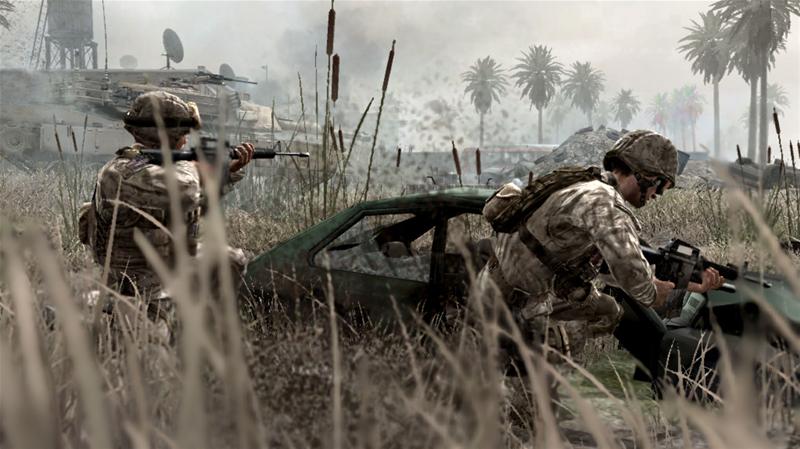
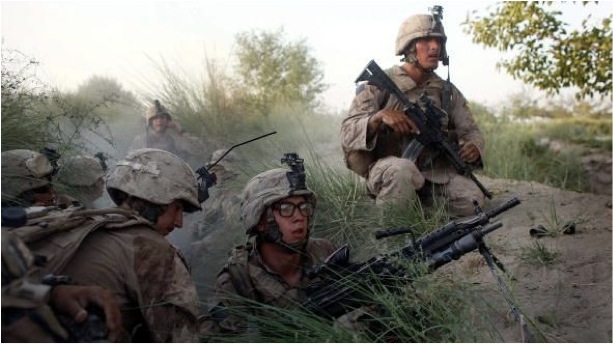 Culturally, Call of Duty has a right to exist. This type of glorification of violence is common place in all types of media. Freedom of expression is constitutionally guaranteed. Whether reading a book, watching a movie or viewing the news on television, violence is served up as entertainment. To ban it in one form would require banning it in all forms. In all forms of communication, it is also virtually impossible to stop young people from being exposed to information, or actions that are not age appropriate. Call of Duty is rated for mature audiences, but demand comes from younger consumers as well. It is not the game, but the parent’s obligation to expose their children to appropriate material.
Morally, Call of Duty should be revisited. As Gilbert remarks, “war is not clean” and it is impossible to reflect the actual reality of blood being shed, body parts being blown away, homes being destroyed and the deaths of victims and their families. Portraying a human decision, that involves those actions as entertainment, desensitizes the actual cost to life. There is no physical or emotional price for the player to pay. The more exposure younger generations have to these types of video games, the more acceptable it seems for life to follow fantasy.
Thinking that Call of Duty is “just a game” does not justify its existence. There is a reset button to start the game over, but there is no button for communication and negotiation with the enemy. There is no nation rebuilding button or a button for renewing and reviewing “our collective senses of community, of humanity, of war.” There is no alternative to the violence. One only has to think of the game Monopoly to understand that games do have an impact. As we increasingly live in a society where winner takes all, and there is less compassion or empathy for anyone else, does that game seem so innocent?
Friday, November 19, 2010
Hawaii Tweets
Queen Liliuokalani:
In dreams and on the streets, my people have spoken: stay strong, lead, right the wrongs.
01/14/1892 5:35AM
Queen Liliuokalani:
The eternal strength of my brother, King Kalakava, will guide my actions against outside interests. The Monarchy will reign.
01/14/1892 10:00AM
Queen Liliuokalani:
My constitutional declaration postponed! Cabinet strongly opposed my wish. Are the enemies so numerous?
01/14/1892 2:10PM
Queen Liliuokalani:
Intuition warns of interlopers. Forces beyond my control may dictate my actions. I fear for the future.
01/14/1892 8:00PM
Queen Liliuokalani:
Challenged! Committee of Safety will block my constitution. I am accused of “revolutionary act.”
01/15/1892 8:00AM
Queen Liliuokalani:
Warship, USS Boston, in Harbor. Will they hinder or help my actions? Must contact John Stevens American Minister.
01/15/1892 8:30AM
Queen Liliuokalani:
Options: declare martial law and risk bloodshed or surrender my throne? Sleep will not come easily.
01/15/1892 7:00PM
Queen Liliuokalani:
My brave, loyal supporters in Palace Square
01/16/1892 8:15AM
Queen Liliuokalani:
US troops have landed! Camped beside palace. Protesting these actions! No bloodshed, please!
01/16/1892 5:45PM
Queen Liliuokalani:
Protest ignored. Sanford Dole becoming President. Betrayed us! Will title ever belong to Princess Ka’iulani?
01/16/1892 6:20PM
Queen Liliuokalani:
Dole officially accepts Presidency. Our nation and ancestors mourn.
01/16/1892 7:05PM
Queen Liliuokalani:
No sleep. Nation in severe jeopardy of losing sovereignty to puppet govt. Greedy US politicians led by Lorrin Thurston.
01/17/1892 5:45AM
Queen Liliuokalani:
Provisional govt. led by Dole recognized by Minister Stevens. I will protest to the end.
01/17/1892 10.00AM
Queen Liliuokalani:
Loyal subject’s smuggled guns discovered. One man shot by police. Thankfully no others hurt.
01/17/1892 2:30PM
Queen Liliuokalani:
Proclaimation: end of my reign, beginning of provisional govt.
01/17/1892 3:00PM
Queen Liliuokalani:
Enemy troops ready. Will only yield my throne under protest. Will US
01/17/1892 6:35PM
Queen Liliuokalani:
Royal guards have surrendered. Peaceful acceptance of new govt. my people…
01/17/1892 8:05PM
Queen Liliuokalani:
Despair…US US
01/17/1892 8:30PM
Taiwan’s Giant Big Brother
http://online.wsj.com/article/SB10001424052748704648604575620023484722744.html
War Clouds over Taiwan
Known formerly as Formosa , which means “beautiful island” in Portuguese, Taiwan
WWII and the Chinese Civil War provide the stepping stones China uses as evidence that Taiwan Taiwan in 1945 at the end of WWII in accordance with their surrender, but Taiwan Taiwan
For China, having Taiwan back in the fold would save the political “face” it feels it lost at the end of WWII with Japan. The island of Taiwan also has strategic military importance as China China and Taiwan Taiwan , along with South Korea , is also the only piece of democracy which is flanked by communist China and its nuclear neighbor North Korea Taiwan has received military and economic aid from numerous countries, including the United States China
Tensions remain high in this area of the world, especially with nuclear capabilities in the hands of so many nations. China ’s aggressive, imperialistic actions toward “Formosa
FoxNews: Your Consistent Source for Yellow Journalism
Health Care Rationing Czar Runs from Reporter
11/18/10
A classic Fox News Network technique: report information out of context to create fear among a conservative audience. In this case the headline is suggesting that Dr. Donald Berwick, head of Centers for Medicare and Medicaid Services, is actually running away from an innocent reporter to escape revealing any “secret” information regarding Obama health care legislation. After watching the video and reading the accompanying news blurb, it appears that Dr. Berwick had made a remark regarding the redistribution of wealth to create a “just” and “humane” health care funding plan in 2008. The reporter was insistently asking misleading questions regarding that statement.
The redistribution of wealth comment was made two years ago and was distinctly Dr. Berwick’s opinion; it does not have any bearing on the current health care legislation. With this headline, Fox News was specifically targeting an audience that reacts vehemently to the thought of the redistribution of wealth in this country. This is the same type of outlandish reporting used by Hearst and Pulitzer to sell their newspapers to people before the Spanish American war. It was clear that Dr. Berwick was on his way to a meeting and the reporter was badgering him with questions as he walked to his destination. Dr. Berwick was not running anywhere from anyone.
The headline did elicit these comments, which were posted below the story:
If czars don't make policy, why are they testifying on Capitol Hill? This whole thing is a scam and an end-around to get away with having radical communists and socialists put in positions of power where they can do permanent damage to our country's interests in favor of furthering the "cause" of true world socialism and the dictatorship of the ruling-class in our time.”
Defund, then repeal, end of story! Berwick can go to hades along with the rest of Obama's marxist pals.
We the People are awake and will fight to restore our Republic.
We the People are awake and will fight to restore our Republic.
I think it would be a very bad decision if they decide to pull the plug on my parents simply because they made the choice. This decision is not up to them.
The CEO of Fox News is Roger Ailes, a successful Republican political consultant. Fox News Corporation is owned by Australian/American media mogul Rupert Murdoch.
Point of View
- Established 1946, Panama
- Trains military operatives - Trains military operatives
- Funded by U.S.
Corporations, Latin American States Eastern States
- Promotes specific ideology, economic status quo - Promotes specific ideology
- Methods: torture, rape, assassination, - Methods: torture, rape,
murder assassination, murder
- Victims: Govt. leaders, innocent civilians - Victims: Govt. leaders, innocent
civilians
The Western Hemisphere Institute for Security Cooperation, formerly known as the School of Americas United States rationalizes and defends the WHISC because it safeguards U.S. United States
Apocalypse Now!
“I love the smell of Napalm in the morning” – Colonel William “Bill” Kilgore
From the movie: Apocalypse Now!
Understanding the movie requires reviewing Vietnam Vietnam
From 1871 to 1940 the French declared the whole area French Indochina. This area included Cochinchina (South Vietnam , including Saigon), Tonkin (North Vietnam ), Annam (Central Vietnam), Cambodia and Laos Tonkin , which they used to their advantage in WWII. In 1945, after the Japanese surrendered, the French tried to reinsert themselves into its former territory. However, continuous fighting with the communist Viet Minh, led by Ho Chi Minh’s Democratic Republic of Vietnam, led to a partitioning of the country during the 1954 Geneva Convention. Vietnam North Vietnam remained communist and was supported by China and the Soviet Union . South Vietnam was called the Republic of Vietnam , supported by the U.S. , Britain , and France Cambodia and Laos
The Geneva Convention also called for a general election to be held in 1956 to finally unify the country. Before the election millions of North Vietnamese moved to the south and only an estimated 10,000 moved to the north. The United States , at this time, was heavily invested in the interests of South Vietnam United States , using the Gulf of Tonkin incident, sent troops to Vietnam United States were sent to Vietnam in 1960 and the war spread to neighboring Cambodia and Laos

Apocalypse Now!, directed by Francis Ford Coppola, revolves around the character of Captain Benjamin Willard who is sent on a secret mission into Cambodia United States
Francis Ford Coppola also famously bases his movie on the novel Heart of Darkness by Joseph Conrad. Conrad’s book is a story regarding the horrific affects of imperialism; its exploitation and devastation of the native African population by the country of Belgium
This movie illustrates that regardless of the motive of a larger nation the spirit of native peoples and their right to govern themselves is stronger than what modern warfare can extract from them. In scene after scene, Captain Willard interacts with U.S. U.S.
http://en.wikipedia.org/wiki/Apocalypse_Now
Thursday, October 21, 2010
Computer, Papers, and a Pen
Learning “blogging style” is more suited to my way of life, than using a text book and writing information on paper. Growing up with a computer is like growing up with a car. You can still live without it now, but not very easily. Typing to me is just as easy as script writing is to my mother. I can be quick and efficient, assessing useful information and discarding the rest in a moment. Having instant access to ideas, images, and research increases the probability of me learning more about one particular subject, or allowing me to follow a tangent off in a totally different direction. I can also communicate my ideas with others easily. It is fast-paced, just like my life.
There are times when learning “pen and paper style” is more beneficial for me. Sitting alone, without distraction, I am able to concentrate deeply. Mathematics, in particular, is a subject that I need to use a pen and paper. Writing ideas on paper helps me think logically, and I make fewer mistakes. I am less willing to move, though, to look for more information. Being exposed to a library to research homework actually brings a sense of concreteness to words. I know the words have been written and stored; I can visually record that sense of “it is still all there” as opposed to accidentally hitting a wrong key and having work disappear into nothingness or having the internet connection lost. If I didn’t have access to a computer, I would know where to find the information I needed.
An optimal learning assignment would allow me to choose which style I find most valuable, whether it would be a learning from a computer, a pen, paper and a book, or sometimes audibly, through voice or song. It is extremely important I recognize that all methods can enhance knowledge.
Topics
Writing about “Song of the Shirt” was my favorite assignment. Reading information in the form of lyrics and then trying to relate to that type of life allowed me to understand the plight of those women on different personal levels. First, I thought how thankful I was that my life is so much different than the mill workers. The song’s message put complaining about my homework into perspective. Secondly, I thought about women in other countries during this same time period. From past research I know that Europe ’s history of industrial labor abuses is just as dismal as our own. Then I finally asked myself if the history of yesterday had changed anything about today. “Sweat shops” do still exist in many countries. “Sweat shops” operate illegally in this country, as well, with unscrupulous shop owners taking advantage of a labor pool of illegal immigrants. I realized that “Song of the Shirt” may always be sung.
The Good, the Bad and the Question
Honesty is the best policy.
There are several positive sides to blogging as homework. The basic fact that so many students like this format is that it is quick. Access to interesting websites and information is almost instantaneous. Keeping track of Facebook drama and doing homework is a multi-tasking student’s dream come true. This format allows for flexibility in scheduling assignments and is a refreshing change from the usual sit, read and write.
The informality of blogging allows students to type their ideas as they come to mind. Several of the questions were emotional in nature, such as the stereotype assignment, and students were able to relay first-hand experiences along with a review of stereotypes found in history. Also, reading other people’s thoughts and ideas, through shared access, gives students an inside glimpse of the history of the writer’s own background. It was interesting to read all viewpoints, whether conservative or liberal, religious or secular, or determine if the student was actually interested in the topic, or not.
As for the environmental greenness of blogging, that is debatable and difficult to answer definitively. On the surface, it would seem that not using paper would be the best choice. But, it is important to keep in mind that the computer manufacturing process is incredibly destructive to the environment, computers are almost obsolete the moment they hit the store shelves, and recycling is hazardous and not cost-efficient at this time. Paper, on the other hand, if used sparingly, can be made of recycled material, optimally come from a sustainable tree farm, and can be recycled easily and cost effectively. Another question to ponder…
Apparent immediately are a few negative sides to blogging. Although some students have incredible ideas to share, the misspelled words and incomplete sentences make it almost impossible to understand what they are trying to communicate. It seems a waste of time to share the incomprehensible.
Understanding that this is a US History class and that certain major events shaped our country is important, but it would be refreshing to have questions that are not so basic. Most students have been writing about slavery, theOregon Trail and the Civil Rights Movement since first grade. Researching more obscure, but important topics might provide students with a new insight. Or, asking students to put themselves in the shoes of a Confederate soldier, or the owner of a textile mill, would give them a new perspective. There are two sides to every story, whether they are good or bad.
Overall, the blogging assessment system has been a unique experience that has the potential to expose students to information that might otherwise have gone unread in a text book. It also allows students to add their own opinions and to share those opinions with others. It has been an enjoyable experience.
There are several positive sides to blogging as homework. The basic fact that so many students like this format is that it is quick. Access to interesting websites and information is almost instantaneous. Keeping track of Facebook drama and doing homework is a multi-tasking student’s dream come true. This format allows for flexibility in scheduling assignments and is a refreshing change from the usual sit, read and write.
The informality of blogging allows students to type their ideas as they come to mind. Several of the questions were emotional in nature, such as the stereotype assignment, and students were able to relay first-hand experiences along with a review of stereotypes found in history. Also, reading other people’s thoughts and ideas, through shared access, gives students an inside glimpse of the history of the writer’s own background. It was interesting to read all viewpoints, whether conservative or liberal, religious or secular, or determine if the student was actually interested in the topic, or not.
As for the environmental greenness of blogging, that is debatable and difficult to answer definitively. On the surface, it would seem that not using paper would be the best choice. But, it is important to keep in mind that the computer manufacturing process is incredibly destructive to the environment, computers are almost obsolete the moment they hit the store shelves, and recycling is hazardous and not cost-efficient at this time. Paper, on the other hand, if used sparingly, can be made of recycled material, optimally come from a sustainable tree farm, and can be recycled easily and cost effectively. Another question to ponder…
Apparent immediately are a few negative sides to blogging. Although some students have incredible ideas to share, the misspelled words and incomplete sentences make it almost impossible to understand what they are trying to communicate. It seems a waste of time to share the incomprehensible.
Understanding that this is a US History class and that certain major events shaped our country is important, but it would be refreshing to have questions that are not so basic. Most students have been writing about slavery, the
Overall, the blogging assessment system has been a unique experience that has the potential to expose students to information that might otherwise have gone unread in a text book. It also allows students to add their own opinions and to share those opinions with others. It has been an enjoyable experience.
Friday, October 15, 2010
Immigrant Soup:
serves hundreds of thousands!
Mix together in large bowl of water:
- anxiety - filth
- hunger - suffering
- sadness - over-whelmed
- love - defeated
- itchy - cold
- rushed - smelly
- weary - elation
- thankful - relief
- sweaty - anticipation
- hot - sick
- puzzled - exhaustion
- pain - loneliness
- fright
Add sea salt, and then pour into Ellis Island .
New Song or Old Song?
When buying that next inexpensive shirt at your local discount store, please keep in mind the Song of the Shirt.
Factory conditions for women, at the time this song was written, were horrendous. Women’s minds were tortured by the monotonous job of sewing shirts. Singing helped relieve their boredom, their loneliness, their suffering and communicated their shared plight. Sewing from sun-up to sun-down, women were only set free by their death; a perfectly sewn “shroud” would be their only legacy. The religious rationalization of this drudgery as “Christian” work gave these women no right to complain. Their souls were going to heaven.
These factory conditions still exist in many countries today where government organizations, such as the Occupational Safety and Health Administration, and worker’s unions, such as the Amalgamated Clothing and Textile Workers Union are not available for worker protection. That cheap shirt, imported from another country, may be sewn by a woman singing this song.
Friday, October 1, 2010
Portraits of Reality
The old saying: “one picture is worth 1000 words” would directly apply to the showcase of work by Erwin E. Smith. Smith’s camera caught in pictures a reality that was in direct opposition to the stereotype afforded by Hollywood Hollywood
Although cowboys would show up with white, perfect teeth, ruggedly handsome faces, dusty, but un-tattered clothing and a perfect physique with no missing limbs or digits on theHollywood set, the actual reality of the physical health of a cowboy was quite different. As Smith’s picture depicts, the environment played a huge role in the health of a cowboy. In a stark desert or on boggy ground surrounded by cliffs the cowboy was constantly at odds with his physical surroundings. Being thrown from a horse while negotiating a steep hillside or drowning while fording a river were always possibilities. Romantic starry nights were rarely the case in an environment where temperatures could vary by 60 degrees or more. Tornadoes, snowstorms, hail, thunderstorms, flooding rains and the burning rays of the sun without adequate protection were also causes for a shortened lifespan.
The actual physical costs of being a cowboy were enormous. In 1875 aWyoming
 Medical care was scarce for the cowboy. Injuries were left to heal awkwardly or led to amputation or death. One famous gunfighter, Doc Holliday, was an actual doctor of dental surgery and had a practice in
Dodge City
Browsing through the many photographs by Erwin E. Smith, another evident difficulty of being a cowboy was emotional stress and the toll it took on their well-being. Loneliness was the topic of many cowboy ballads, but the movies once again glorified an extremely unhealthy condition. Loneliness can be depressing and cause extreme anxiety. Other mental health issues included constantly living in a state of fear. Fear caused by the unknown. Indian attacks, gunshots wounds (“death settles all disputes”), cattle stampedes and even fear of coming upon a vigilante group, out for revenge on the first person they find, were all contributors to the actual mental health of a cowboy. The faces of the men in Smith’s photographs show that stress of everyday life.
“Anybody with guts and a horse” could be a cowboy. Those that signed up were generally in their late teens, early twenties and single. Those who lived past the age of 35 were extremely lucky.
“Yup. The end of a way of life. Too bad. It’s a good way. Wagons forward! Yo!” Easy for John Wayne to say, he got to go home to a warm bed every night.
Image source <http://www.cartermuseum.org/collections/smith/images/details/LC-S59-223.jpg>
Although cowboys would show up with white, perfect teeth, ruggedly handsome faces, dusty, but un-tattered clothing and a perfect physique with no missing limbs or digits on the
The actual physical costs of being a cowboy were enormous. In 1875 a

Browsing through the many photographs by Erwin E. Smith, another evident difficulty of being a cowboy was emotional stress and the toll it took on their well-being. Loneliness was the topic of many cowboy ballads, but the movies once again glorified an extremely unhealthy condition. Loneliness can be depressing and cause extreme anxiety. Other mental health issues included constantly living in a state of fear. Fear caused by the unknown. Indian attacks, gunshots wounds (“death settles all disputes”), cattle stampedes and even fear of coming upon a vigilante group, out for revenge on the first person they find, were all contributors to the actual mental health of a cowboy. The faces of the men in Smith’s photographs show that stress of everyday life.
“Anybody with guts and a horse” could be a cowboy. Those that signed up were generally in their late teens, early twenties and single. Those who lived past the age of 35 were extremely lucky.
“Yup. The end of a way of life. Too bad. It’s a good way. Wagons forward! Yo!” Easy for John Wayne to say, he got to go home to a warm bed every night.
Image source <http://www.cartermuseum.org/collections/smith/images/details/LC-S59-223.jpg>
RIP Stereotypes
The quintessential Hollywood Western story of good vs. evil, Gunsmoke: Gunfighter, R.I.P. provided stereotypes galore. There were some characteristics that all the cowboys shared in this episode, and then there were differences that were deliberate, in their appearance and intentions, that individually labeled the cowboys either good souls or bad seeds.
Silver screen interpretations of the classic cowboy included a rugged physique, with a face usually adorned with scars received from their last encounter in the harsh environment. Their clothing of leather chaps, hat, kerchief, gun belt and gun, spurs, long sleeve shirt with accompanying vest, and unmistakable pointed-toe boots provided the clues as to their lifestyle, tough and dangerous. Mysteriously, all cowboys seemed to be able to sustain gunshot wounds without much medical attention, and recover handsomely within days. The stereotypical cowboy does seem to have a limited education. They also tend to have a one-track mind set on seeking out their heart’s desire, which can include romance, alcohol, revenge, or robbing banks. Cowboys do not give much consideration to the consequences of their actions.
“If everything isn’t black and white, I say, ‘why the hell not?’” – John Wayne.
White, the color of Yang energy, purity, righteousness, and exceptionally chaste morality is the hue of the tall cowboy hat worn by the hero inDodge City
Black, the color of Yin energy, evil, and generally all around bad-assness was also the color of the hat worn by the cowboy, set on revenge for time spent in jail courtesy of Marshall Dillon. His clothing was dusty and disheveled, his face pock-marked, and his breath smelled of the whiskey that was his liquid courage. Bad cowboy man had a side-kick who was stereotypically portrayed as having a weak character, zero self confidence, no education, but always ready to follow orders even if they came from the devil. Lurking in saloons, with shifty eyes and fingers on the trigger, these men in black created the ever-present evil always calling to forlorn souls on the trail, in this case the errant gunfighter.
The portrayal of women in this episode of Gunsmoke was classic and can be summed up in two words: pathetic helplessness. Thank goodness there were cowboys around to tell them what to do every second of their lives or these women would be out aimlessly wandering the hills. Ethnic women, in this story the Chinese laundry woman, were cast with noticeable American beauty features and singled out as being especially vulnerable, weak and powerless. At least Miss Kitty, the beautiful saloon pimp with a good heart, had the gumption to order the cowboys around on occasion.
Gunsmoke: Gunfighter R.I.P. was a simple story, filled with the stereotypes popular during that time period. Unfortunately, the real story of exceptional characters, both male and female, and of all ethnicities rarely got that coveted television time-slot.
Silver screen interpretations of the classic cowboy included a rugged physique, with a face usually adorned with scars received from their last encounter in the harsh environment. Their clothing of leather chaps, hat, kerchief, gun belt and gun, spurs, long sleeve shirt with accompanying vest, and unmistakable pointed-toe boots provided the clues as to their lifestyle, tough and dangerous. Mysteriously, all cowboys seemed to be able to sustain gunshot wounds without much medical attention, and recover handsomely within days. The stereotypical cowboy does seem to have a limited education. They also tend to have a one-track mind set on seeking out their heart’s desire, which can include romance, alcohol, revenge, or robbing banks. Cowboys do not give much consideration to the consequences of their actions.
“If everything isn’t black and white, I say, ‘why the hell not?’” – John Wayne.
White, the color of Yang energy, purity, righteousness, and exceptionally chaste morality is the hue of the tall cowboy hat worn by the hero in
Black, the color of Yin energy, evil, and generally all around bad-assness was also the color of the hat worn by the cowboy, set on revenge for time spent in jail courtesy of Marshall Dillon. His clothing was dusty and disheveled, his face pock-marked, and his breath smelled of the whiskey that was his liquid courage. Bad cowboy man had a side-kick who was stereotypically portrayed as having a weak character, zero self confidence, no education, but always ready to follow orders even if they came from the devil. Lurking in saloons, with shifty eyes and fingers on the trigger, these men in black created the ever-present evil always calling to forlorn souls on the trail, in this case the errant gunfighter.
The portrayal of women in this episode of Gunsmoke was classic and can be summed up in two words: pathetic helplessness. Thank goodness there were cowboys around to tell them what to do every second of their lives or these women would be out aimlessly wandering the hills. Ethnic women, in this story the Chinese laundry woman, were cast with noticeable American beauty features and singled out as being especially vulnerable, weak and powerless. At least Miss Kitty, the beautiful saloon pimp with a good heart, had the gumption to order the cowboys around on occasion.
Gunsmoke: Gunfighter R.I.P. was a simple story, filled with the stereotypes popular during that time period. Unfortunately, the real story of exceptional characters, both male and female, and of all ethnicities rarely got that coveted television time-slot.
Subscribe to:
Posts (Atom)