Simply speaking: finding chemicals used to create bombs is never a really a good thing.
Also simply speaking: deciding how to treat suspected insurgents is not an easy task.
If this were my team of soldiers...
-I would confiscate all of the chemicals found under the floor tiles.
-The people found in the house would be transported to a holding location nearby.
-At the holding location, a translator would be provided for anyone who could not speak English.
-I would have my team ask questions at first, to see if any information could be discovered immediately.
-If the suspected insurgents either refuse to answer questions or give completely false information, a very minute amount of torture will be administered (such as wall stands). This, however, would be the harshest treatment given until other information is gathered from other outside sources.
-While the suspected insurgents are held, I would assign a K9 team of dogs to capture the scent of the chemicals used to make the bombs. The unit would hopefully sniff out the other location.
-If, and only if, the K9 unit fails to do its job, a heavier amount of torture (such as sleep deprivation) would be administered to gain further information.
-If no information is gained it may be assumed that the people are innocent, or they may be kept in a holding site for as long as it is necessary (until the other chemicals are located).
Simply speaking: this is incredibly hard just to think about, let alone write a blog about because of the urgency of the situation.
A short term repercussion could be not finding the bomb factory at all because of the somewhat slow, but relatively humane (as humane as torture gets!) process of interrogation. This puts countless lives in danger.
A long term repercussion could be an even worse relationship with the country involved. If we are already in the country discovering bomb factories and intruding in the lives of citizens, after news of the interrogation and torture leak out, the relationship can only get worse.
Friday, December 24, 2010
Declaration/Response
The United States was definitely using its intimidating power of intention to impress on Germany United States had huge resources, which included men, ships and submarines, to stop Germany United States
It appears thatGermany rejected the Declaration of War by the United States as illegal; rationalizing the war was between Europe ’s nation states. Germany felt that the United States was arrogant, and had overstepped its boundaries by getting involved with its war with England Germany
It appears that

Seesaw of Questions: Wikileaks
The recent release of United States of America ’s classified information, by Mr. Julian Assange of Australia
In consideration of the positive aspects of the release of this type of sensitive, governmental communication:
In consideration of the positive aspects of the release of this type of sensitive, governmental communication:
- Will the information released encourage the government to amend its policies of keeping communications secret?
- Will it inspire politicians to use all legal avenues of resolution before resorting to illegal or immoral decisions?
- Will citizens of the USA
- Will other countries follow the lead of countries that keep all information open for public scrutiny?
- Will sharing information provide a platform for peace and understanding between nations?
- Will these leaks enhance the lives of the people it affects?
In consideration of the negative aspects of the release of this type of sensitive, governmental communication:
- Will the information released cause damage to the relationships the United States
- Will the damage be so severe that it starts a war?
- Will it motivate other countries to enhance their security so leaked information is virtually impossible?
- Will it only affect democratic countries?
- Will politicians, whose motives were noble, be castigated?
- Will people be able to separate personal opinions with actual policy?
- Will these leaks harm the lives of people it affects?
- Will the world be a safer, more peaceful place?
In consideration of the motivations of Julian Assange:
- Is Julian Assange a “sanctimonious opportunist?” (K.J. New Mexico
- Is Julian Assange intellectually brilliant, but emotionally unstable?
- Is Julian Assange creditably concerned about open access to government communications?
- Is Julian Assange considering the affect his actions have had on a global scale?
- Is Julian Assange going to release other nation’s secret documents on the same scale as the United States
- Is Julian Assange prepared to take responsibility for the reactions his actions have created?
- Is Julian Assange a creator of havoc or of peace?
As long as there are human beings inhabiting the earth, human beings will make mistakes. Learning from mistakes and using them to better the world brings about peace. Julian Assange is playing Creator with the lives of many people for better or for worse. Will he be first in line at the nuclear bunker?
Friday, December 10, 2010
Greetings from the Front
Today’s younger generations would go through withdrawal symptoms if they had to communicate strictly by snail mail. Instantaneous information, drawn from multiple sources, is at everyone’s fingertips. Phones are turning into mini-computers, and even images, photographic or drawn, can be sent and received in a moment. Waiting for an older computer to boot up can cause serious frustration!
The letters from World War I were sent by mail and this caused many an anxiety disorder. The letters from FM McKiernan at Camp Gordon , to Mrs. C.U. Scripture of Mils, Maine
First would be the actual reliability of the mail service. Never knowing if a letter was received would be a serious consideration. Would this mean anything other than the letter was lost or would it mean something more serious of the writer from the war, such as injury, missing in action, captured, or dead? Not receiving a letter from home would be just as agonizing to a soldier as this could possibly mean there are family problems.
Letters were the only way to receive and send information. As in the case of McKiernan, he was trying to comfort the mother of his bunkmate, who she hadn’t heard from for awhile. Even though he assured her that her son was probably ok, and possibly better off than himself, he still brought up the possibility of injury. In was impossible for people to help one another in a timely way.
Finally, not being able to provide instantaneous emotional support and/or comfort to a grieving loved one would be a huge disadvantage to such slow news. Hearing horrific, and sometimes good, news without being able to share it with another person can be quite discomforting. Overall, being able to communicate information quickly can be quite advantageous.
Nature Vs Nurture: An End to the War? – Nature Via Nurture: Genes, Experience and What Makes Us Human, Matt Ridley, 2004, Gale Group
Heartbreak Gallipoli
The loss of human life in Gallipoli was staggering. The survivors haunted by memories of terror. Politicians, far removed from the battlefield, were playing a game of Risk with life that wasn’t theirs. From the movie trailer, Gallipoli (2005) Trailer, there are several scenes and narrative that provide clues as to why there were so many casualties.
Motivation would be at the top of the list of reasons.Britain
Similar to our present day struggle inAfghanistan Britain
Apparent throughout the movie trailer were the rounds and rounds of mortar fire and machine gun attacks that pummeled soldiers at every turn. The machine gun was invented in 1884 and was manufactured and readily available for this war. Using what was modern weaponry at the time with outdated strategic tactics turned Gallipoli into a slaughter house. A similar problem faced the British during the Revolutionary War. They were very slow to adapt to the “gorilla” warfare of their enemy.
The impact of the tremendous loss of human life was a strategic tragedy as well as a societal tragedy. With so many soldiers dying in this specific conflict,Britain Britain Turkey
Motivation would be at the top of the list of reasons.
Similar to our present day struggle in
Apparent throughout the movie trailer were the rounds and rounds of mortar fire and machine gun attacks that pummeled soldiers at every turn. The machine gun was invented in 1884 and was manufactured and readily available for this war. Using what was modern weaponry at the time with outdated strategic tactics turned Gallipoli into a slaughter house. A similar problem faced the British during the Revolutionary War. They were very slow to adapt to the “gorilla” warfare of their enemy.
The impact of the tremendous loss of human life was a strategic tragedy as well as a societal tragedy. With so many soldiers dying in this specific conflict,
Socially, Britain Britain
Reality: The Game Does Exist
“Lifting one veil of ignorance immediately reveals a number of new veils” – Matt Ridley
The question of why Call of Duty exists supersedes the question of should it exist. Why the game exists leads to the very basic question of whether human behavior is controlled by nature or nurture. Obviously, this question is HUGE and still being vigorously debated. New evidence suggests, however, that a transition between the two is evolving. Humans, uniquely, have the capacity to accumulate information across time and space. Stored knowledge and an increased understanding of the role genes play in human behavior will be the “only antidote to mankind’s destructive tendencies.” (Ridley, 2004)
Should Call of Duty exist? The answer calls for access to humankinds shared information regarding the role genetics play to overcome that violent inclination and choosing the moral willingness to follow a path to peace. Christopher Gilbert, in his article Ready to Do Violence: War Games or Simply Modern Warfare quotes Kenneth Burke: “getting along with each other – not fighting, defaming, victimizing or killing each other – is the essence of the good life.” There is always hope that mankind will choose the good life.

 Culturally, Call of Duty has a right to exist. This type of glorification of violence is common place in all types of media. Freedom of expression is constitutionally guaranteed. Whether reading a book, watching a movie or viewing the news on television, violence is served up as entertainment. To ban it in one form would require banning it in all forms. In all forms of communication, it is also virtually impossible to stop young people from being exposed to information, or actions that are not age appropriate. Call of Duty is rated for mature audiences, but demand comes from younger consumers as well. It is not the game, but the parent’s obligation to expose their children to appropriate material.
Morally, Call of Duty should be revisited. As Gilbert remarks, “war is not clean” and it is impossible to reflect the actual reality of blood being shed, body parts being blown away, homes being destroyed and the deaths of victims and their families. Portraying a human decision, that involves those actions as entertainment, desensitizes the actual cost to life. There is no physical or emotional price for the player to pay. The more exposure younger generations have to these types of video games, the more acceptable it seems for life to follow fantasy.
Thinking that Call of Duty is “just a game” does not justify its existence. There is a reset button to start the game over, but there is no button for communication and negotiation with the enemy. There is no nation rebuilding button or a button for renewing and reviewing “our collective senses of community, of humanity, of war.” There is no alternative to the violence. One only has to think of the game Monopoly to understand that games do have an impact. As we increasingly live in a society where winner takes all, and there is less compassion or empathy for anyone else, does that game seem so innocent?
The question of why Call of Duty exists supersedes the question of should it exist. Why the game exists leads to the very basic question of whether human behavior is controlled by nature or nurture. Obviously, this question is HUGE and still being vigorously debated. New evidence suggests, however, that a transition between the two is evolving. Humans, uniquely, have the capacity to accumulate information across time and space. Stored knowledge and an increased understanding of the role genes play in human behavior will be the “only antidote to mankind’s destructive tendencies.” (Ridley, 2004)
Should Call of Duty exist? The answer calls for access to humankinds shared information regarding the role genetics play to overcome that violent inclination and choosing the moral willingness to follow a path to peace. Christopher Gilbert, in his article Ready to Do Violence: War Games or Simply Modern Warfare quotes Kenneth Burke: “getting along with each other – not fighting, defaming, victimizing or killing each other – is the essence of the good life.” There is always hope that mankind will choose the good life.
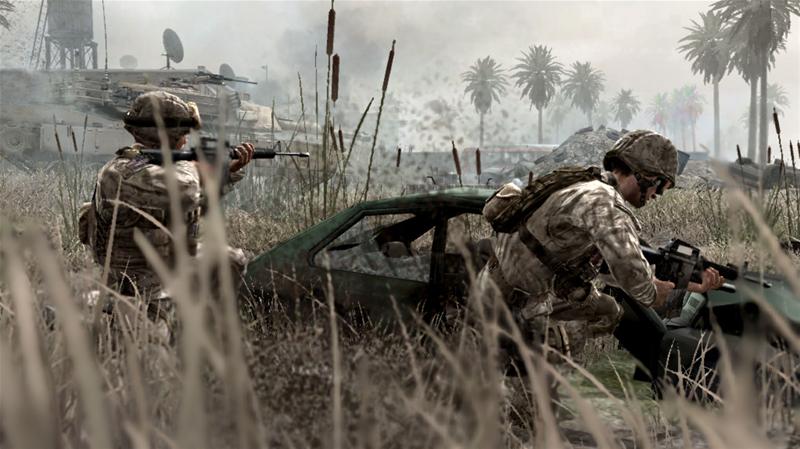
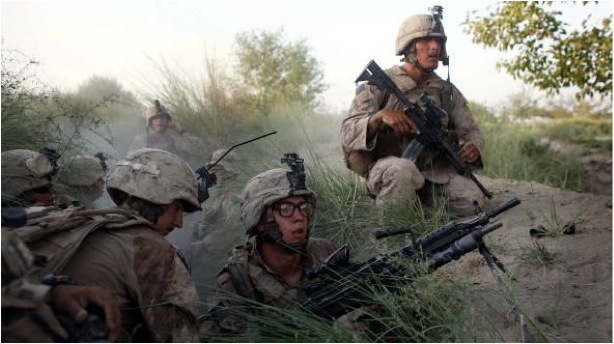 Culturally, Call of Duty has a right to exist. This type of glorification of violence is common place in all types of media. Freedom of expression is constitutionally guaranteed. Whether reading a book, watching a movie or viewing the news on television, violence is served up as entertainment. To ban it in one form would require banning it in all forms. In all forms of communication, it is also virtually impossible to stop young people from being exposed to information, or actions that are not age appropriate. Call of Duty is rated for mature audiences, but demand comes from younger consumers as well. It is not the game, but the parent’s obligation to expose their children to appropriate material.
 Morally, Call of Duty should be revisited. As Gilbert remarks, “war is not clean” and it is impossible to reflect the actual reality of blood being shed, body parts being blown away, homes being destroyed and the deaths of victims and their families. Portraying a human decision, that involves those actions as entertainment, desensitizes the actual cost to life. There is no physical or emotional price for the player to pay. The more exposure younger generations have to these types of video games, the more acceptable it seems for life to follow fantasy.
Thinking that Call of Duty is “just a game” does not justify its existence. There is a reset button to start the game over, but there is no button for communication and negotiation with the enemy. There is no nation rebuilding button or a button for renewing and reviewing “our collective senses of community, of humanity, of war.” There is no alternative to the violence. One only has to think of the game Monopoly to understand that games do have an impact. As we increasingly live in a society where winner takes all, and there is less compassion or empathy for anyone else, does that game seem so innocent?
Subscribe to:
Posts (Atom)