The question of why Call of Duty exists supersedes the question of should it exist. Why the game exists leads to the very basic question of whether human behavior is controlled by nature or nurture. Obviously, this question is HUGE and still being vigorously debated. New evidence suggests, however, that a transition between the two is evolving. Humans, uniquely, have the capacity to accumulate information across time and space. Stored knowledge and an increased understanding of the role genes play in human behavior will be the “only antidote to mankind’s destructive tendencies.” (Ridley, 2004)
Should Call of Duty exist? The answer calls for access to humankinds shared information regarding the role genetics play to overcome that violent inclination and choosing the moral willingness to follow a path to peace. Christopher Gilbert, in his article Ready to Do Violence: War Games or Simply Modern Warfare quotes Kenneth Burke: “getting along with each other – not fighting, defaming, victimizing or killing each other – is the essence of the good life.” There is always hope that mankind will choose the good life.
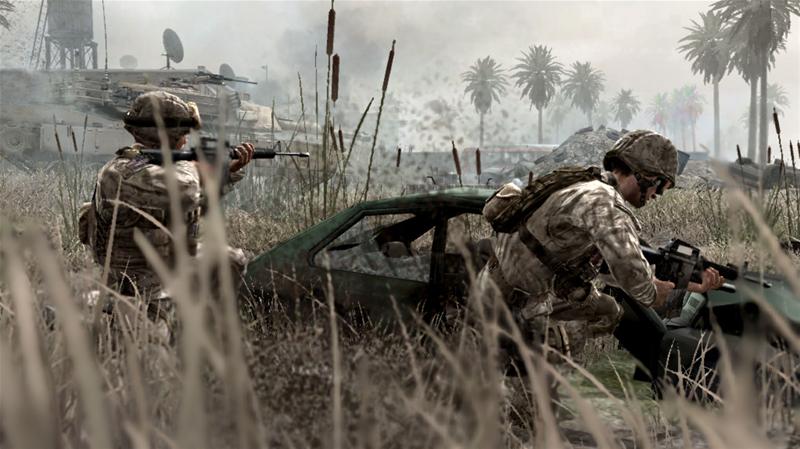
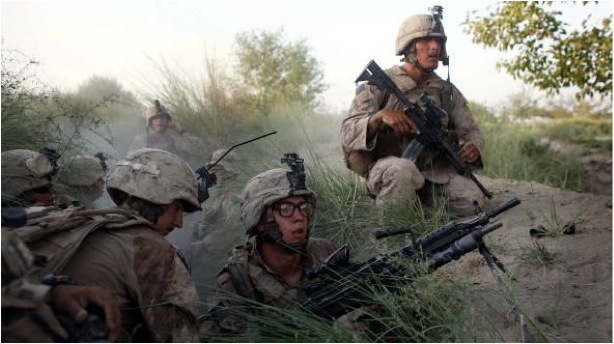 Culturally, Call of Duty has a right to exist. This type of glorification of violence is common place in all types of media. Freedom of expression is constitutionally guaranteed. Whether reading a book, watching a movie or viewing the news on television, violence is served up as entertainment. To ban it in one form would require banning it in all forms. In all forms of communication, it is also virtually impossible to stop young people from being exposed to information, or actions that are not age appropriate. Call of Duty is rated for mature audiences, but demand comes from younger consumers as well. It is not the game, but the parent’s obligation to expose their children to appropriate material.
 Morally, Call of Duty should be revisited. As Gilbert remarks, “war is not clean” and it is impossible to reflect the actual reality of blood being shed, body parts being blown away, homes being destroyed and the deaths of victims and their families. Portraying a human decision, that involves those actions as entertainment, desensitizes the actual cost to life. There is no physical or emotional price for the player to pay. The more exposure younger generations have to these types of video games, the more acceptable it seems for life to follow fantasy.
Thinking that Call of Duty is “just a game” does not justify its existence. There is a reset button to start the game over, but there is no button for communication and negotiation with the enemy. There is no nation rebuilding button or a button for renewing and reviewing “our collective senses of community, of humanity, of war.” There is no alternative to the violence. One only has to think of the game Monopoly to understand that games do have an impact. As we increasingly live in a society where winner takes all, and there is less compassion or empathy for anyone else, does that game seem so innocent?

